
In today’s rapidly evolving digital era, businesses face a landscape transformed by technology advancements, presenting new opportunities, challenges, and heightened consumer expectations. Customers now wield unprecedented power with information, discernment, and a strong voice to express their preferences. They demand seamless interactions, personalized offerings, and convenient solutions. Businesses must wholeheartedly embrace customer-centricity which entails understanding and anticipating customer needs, delivering exceptional experiences, and building lasting relationships.
Embracing Customer-Centricity in the Digital Age
In the digital age, customer-centricity transcends mere personalization and becomes a transformative cultural shift. It entails adopting a philosophy and strategy that places paramount importance on understanding and catering to customers’ needs, preferences, and experiences. This customer-centric approach places customer satisfaction and value creation at the core of every decision-making process, operational aspect, and interaction. In today’s digital landscape, customer-centricity extends beyond meeting demands; it strives to deliver personalized, seamless, and captivating experiences across both online and offline touchpoints. By harnessing technology and data, businesses gain valuable insights into customer behaviors, preferences, and sentiments, enabling them to offer tailored offerings, communications, and interactions that deliver maximum value.
By aligning customer-centricity with strategic business objectives, organizations recognize that prioritizing customers drives sustainable growth, boosts market share, and fosters long-term loyalty. Embracing a customer-centric approach sets businesses apart in a fiercely competitive marketplace, builds a robust brand reputation, attracts new customers, and cultivates customer advocacy. Remarkable customer experiences lead to heightened customer retention, decreased churn rates, and maximized customer lifetime value.
Moreover, customer-centricity serves as a catalyst for innovation and product development. By actively listening to customer feedback, comprehending pain points, and anticipating future needs, businesses can develop products and services that resonate deeply with their target audience. This proactive approach yields higher adoption rates, increased customer engagement, and substantial revenue growth.
Customer Orchestration and Customer-Centricity
In addition to embracing customer-centricity, businesses must also grasp the concept of customer orchestration—strategic coordination of customer interactions and touchpoints throughout the entire customer journey. Customer orchestration aims to deliver seamless, personalized experiences by integrating channels, technologies, and departments.
Recognizing that customers engage with businesses through multiple touchpoints, such as websites, mobile apps, social media, call centers, and physical stores, customer orchestration strives to create a unified and consistent experience across these channels. Its goal is to enable customers to transition effortlessly between channels without disruptions.
To achieve effective customer orchestration, businesses must align internal processes, systems, and departments to ensure a seamless and consistent customer experience. This requires breaking down silos and integrating legacy systems. By streamlining workflows, eliminating unnecessary steps, and implementing customer relationship management (CRM) systems or integrating existing systems, businesses can facilitate the sharing of customer data across departments. This unified view of the customer allows for more personalized and coordinated interactions.
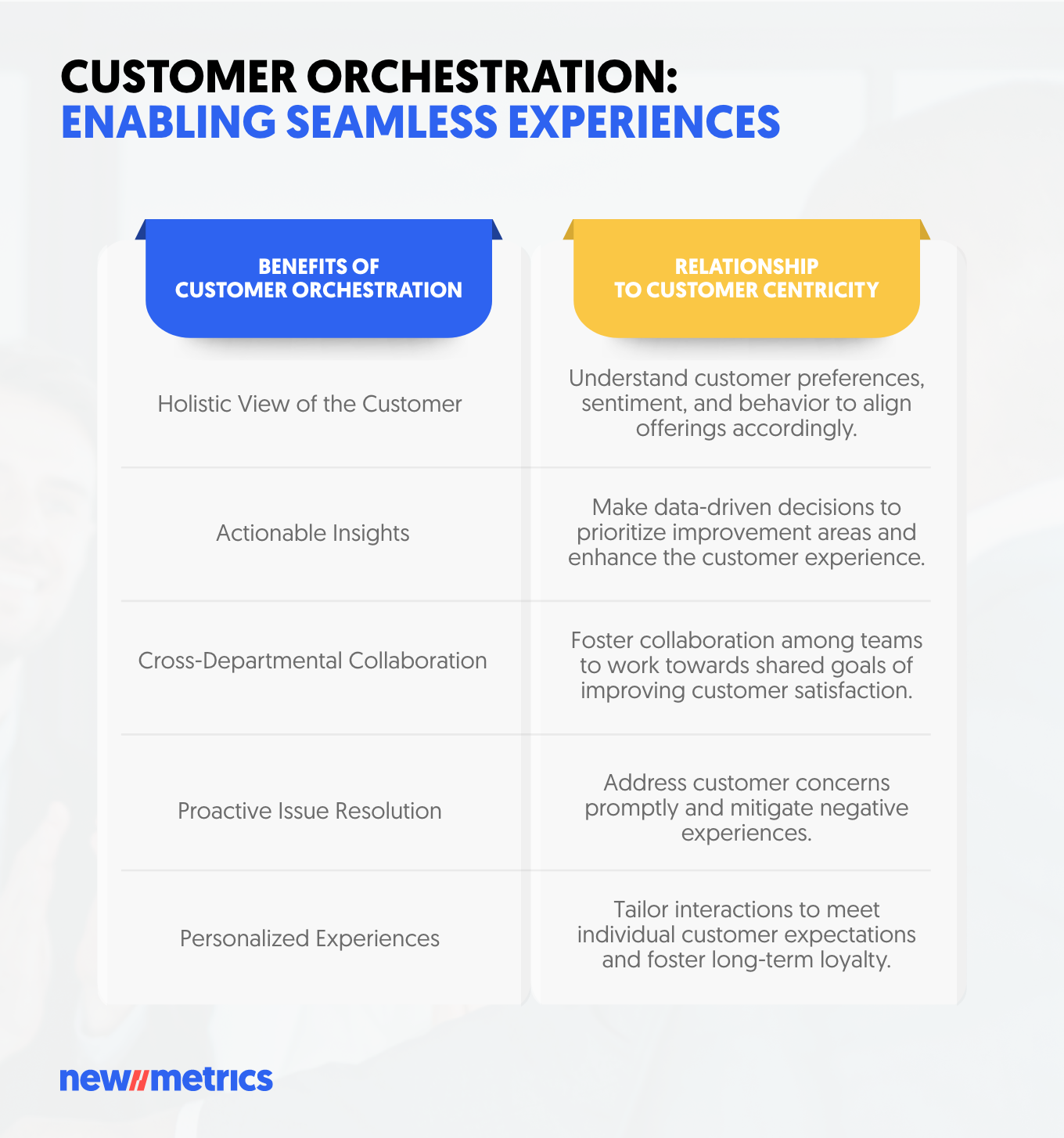
Benefits of Customer Orchestration
- Holistic View of the Customer: Customer orchestration, exemplified by platforms such as Medallia, empowers businesses to collect feedback from multiple touchpoints and consolidate the data into a single platform. This comprehensive view enables a deep understanding of customer preferences, sentiments, and behaviors, providing valuable insights to enhance the overall customer experience.
- Actionable Insights: Medallia’s advanced analytics and machine learning algorithms transform customer feedback data into actionable insights. These insights help businesses identify key drivers of satisfaction, prioritize improvement areas, and make data-driven decisions to elevate the customer experience.
- Cross-Departmental Collaboration: Customer orchestration fosters collaboration among different departments within an organization. Medallia’s platform facilitates the sharing of customer insights, enabling teams to align their efforts, identify shared goals, and work together to improve customer satisfaction and loyalty.
- Proactive Issue Resolution: With real-time engagement capabilities offered by platforms such as Medallia, businesses can promptly address customer concerns. By identifying dissatisfied customers and proactively resolving their issues, businesses can mitigate negative experiences and strengthen customer relationships.
- Personalized Experiences: Customer orchestration empowers businesses to deliver personalized experiences at various touchpoints. Leveraging insights from platforms such as Medallia, companies can understand individual preferences and tailor interactions to meet customer expectations, fostering long-term loyalty.
Customer-Centricity: Challenges and Solutions
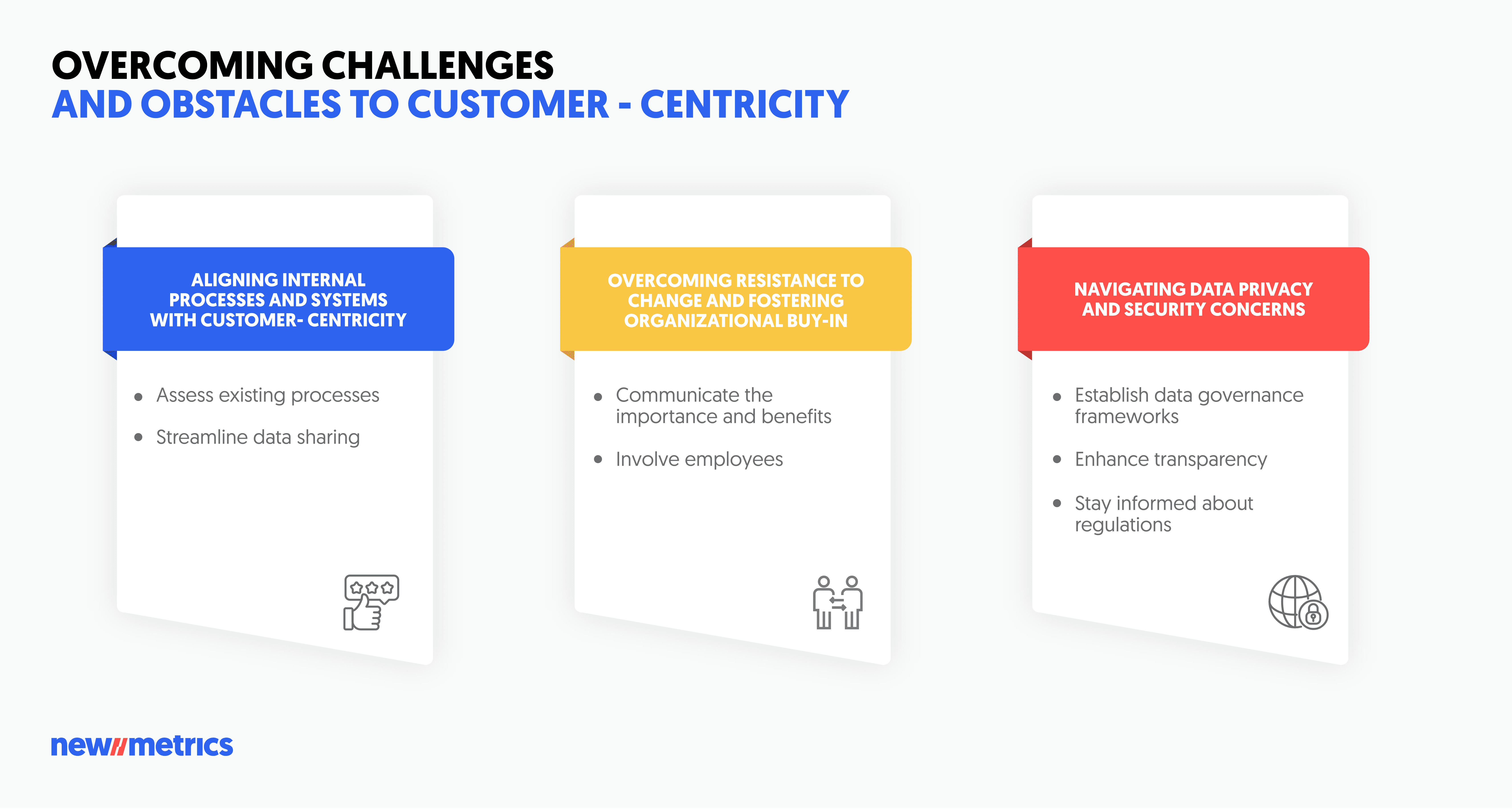
Aligning internal processes and systems with customer-centricity
Achieving customer-centricity often requires aligning internal processes, systems, and departments to ensure a seamless and consistent customer experience across the organization. However, this alignment can be challenging due to siloed operations and legacy systems. To overcome this challenge, businesses can take the following steps:
- Assess existing processes: Identify areas that may hinder customer-centricity and redesign processes to eliminate bottlenecks and improve efficiency. Streamline workflows and remove unnecessary steps that do not add value to the customer experience.
- Streamline data sharing: Implement customer relationship management (CRM) systems or integrate existing systems to facilitate the sharing of customer data across departments. This enables a unified view of the customer and streamlines internal operations. Encourage collaboration and cross-functional communication to break down silos.
Overcoming resistance to change and fostering organizational buy-in
Resistance to change is a common obstacle when implementing customer-centric initiatives. Employees may be accustomed to traditional business and resist adopting new processes or embracing a customer-centric mindset. To overcome resistance and foster organizational buy-in, businesses can consider the following approaches:
- Communicate the importance and benefits: Clearly communicate the value of customer-centricity to employees at all levels of the organization. Explain how it aligns with strategic goals, enhances the customer experience, and drives business success. Provide training, education, and real-life examples to help employees understand the benefits.
- Involve employees: Involve them in decision-making and actively seek their input and feedback. This fosters a sense of ownership and encourages buy-in. Creating cross-functional teams and promoting collaboration also helps break down silos and creates a shared understanding of the customer-centric vision.
Navigating data privacy and security concerns
In the digital era, businesses must navigate data privacy and security concerns while implementing customer-centric strategies. Protecting customer privacy and complying with regulations such as GDPR (General Data Protection Regulation) is crucial. To address these concerns, businesses should consider the following actions:
- Establish data governance frameworks: Develop robust frameworks that outline how customer data is collected, stored, processed, and secured. To safeguard customer information, implement proper data protection measures, including encryption and access controls.
- Enhance transparency: Communicate with customers regarding data collection and usage in a transparent manner. Obtain explicit consent for data collection and provide customers with control over their data preferences. Clearly communicate privacy policies and inform customers about the security measures to protect their data.
- Stay informed about regulations: Regularly review and update data privacy policies to ensure ongoing compliance with relevant regulations. Stay informed about changing regulations and industry best practices to adapt practices accordingly and maintain customers’ trust.
Creating Customer-Centricity Strategies
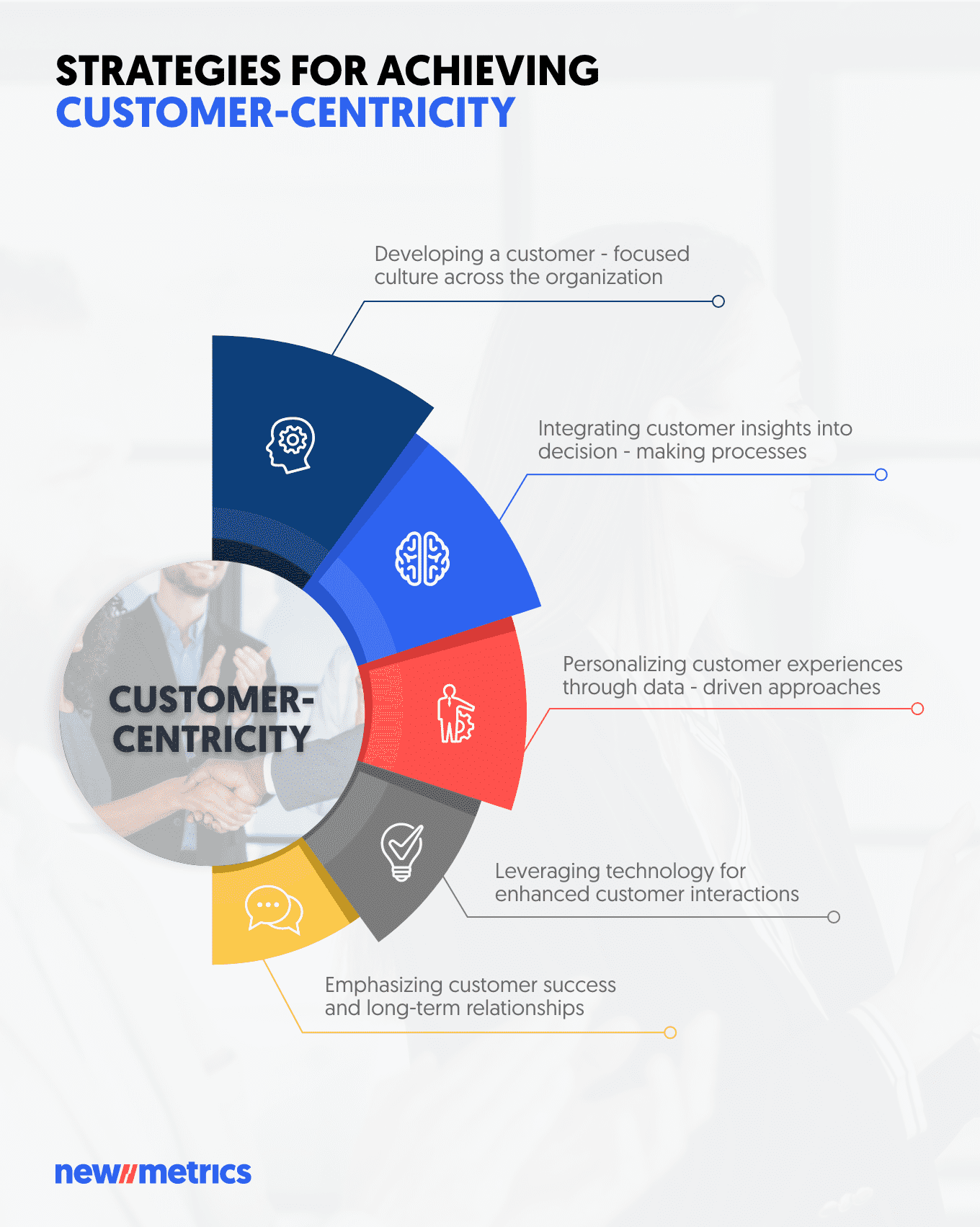
Developing a Customer-Focused Culture Across the Organization
- Instill a deep understanding and appreciation for the customer in every employee:
- Encourage empathy and understanding of customer needs, challenges, and preferences.
- Foster a customer-first mentality that emphasizes value delivery and exceeding expectations.
- Provide opportunities for direct interaction with customers to gain firsthand insights.
- Foster a customer-centric mindset through leadership:
- Leadership plays a crucial role in driving a customer-centric culture.
- Communicate the organization’s commitment to customer-centricity and prioritize customer needs in decision-making.
- Lead by example, demonstrating a customer-centric approach in daily operations and interactions.
- Cultivate customer-centric skills and behaviors through training and development:
- Offer training sessions on customer service excellence, effective communication, and problem-solving.
- Provide employees with tools and resources to understand customer needs and deliver personalized experiences.
- Recognize and reward employees who consistently demonstrate customer-centric behaviors.
- Promote cross-functional collaboration and communication:
- Encourage collaboration and knowledge-sharing between departments to understand the customer journey holistically.
- Establish open communication channels for exchanging customer insights, feedback, and best practices.
- Break down silos and foster a collaborative environment for solving customer challenges.
- Continuously reinforce and measure customer-centricity:
- Communicate the organization’s commitment to customer-centricity through internal channels.
- Establish key performance indicators (KPIs) aligned with customer-centric goals.
- Collect employee feedback to assess the perception of the customer-centric culture and identify areas for improvement.
Integrating Customer Insights into Decision-Making Processes
- Actively collect and analyze customer data:
- Utilize various methods such as surveys, feedback forms, and social media monitoring.
- Consolidate customer information using CRM systems across touchpoints.
- Leverage data collection tools and techniques to gain a comprehensive view of the customer.
- Utilize data analytics and customer relationship management systems:
- Analyze customer data using advanced analytics and machine learning algorithms.
- Uncover patterns and trends in customer behavior to generate actionable insights.
- Integrate customer insights with other business data for a holistic understanding.
- Incorporate customer insights into strategic decisions:
- Align business goals with customer needs and preferences.
- Guide product development and innovation efforts using customer feedback and preferences.
- Develop targeted marketing campaigns and customer-centric service initiatives.
Personalizing Customer Experiences through Data-Driven Approaches
- Utilize customer data and technology for personalization:
- Gather and analyze customer data, leveraging CRM systems and data analytics tools.
- Create personalized experiences based on transaction history, browsing behavior, demographics, and preferences.
- Employ technology to process and interpret customer data for tailored interactions.
- Segment the customer base for targeted marketing:
- Divide the customer base into demographics, behavior, and preferences segments.
- Develop targeted campaigns with relevant content, offers, and recommendations.
- Implement dynamic content and recommendation engines for real-time personalization.
- Customize communications based on individual preferences:
- Personalize communication channels, message content, and frequency.
- Send personalized emails or push notifications with relevant recommendations or offers.
- Tailor messaging and communication styles to individual customer preferences.
- Continuously refine personalization efforts:
- Analyze customer data and feedback to enhance personalization strategies.
- Monitor engagement metrics, conversion rates, and feedback to gauge effectiveness.
- Respect customer privacy and data protection regulations.
Leveraging Technology for Enhanced Customer Interactions
- Leverage Orchestrator technology for enhanced interactions:
- Integrate data and systems from multiple sources to gain a holistic customer view.
- Utilize advanced analytics to analyze customer data and generate insights.
- Automate processes and deliver personalized interactions across touchpoints.
- Coordinate interactions seamlessly across channels.
- Stay on top of emerging technologies:
- Stay informed about advancements like Augmented Reality (AR), Virtual Reality (VR), and voice-activated assistants.
- Experiment with new technologies to improve customer experiences.
- Monitor feedback and behavior analytics to assess the effectiveness and make adjustments.
Emphasizing Customer Success and Long-Term Relationships
- Actively engage with customers and seek feedback:
- Encourage open communication for customers to share thoughts and concerns.
- Utilize various channels to collect feedback and analyze it for improvements.
- Implement personalized follow-ups:
- Send personalized thank-you notes, follow-up emails, or messages.
- Address customer issues promptly and with personalized responses.
- Provide proactive updates based on customer preferences.
- Develop loyalty programs and rewards:
- Create programs offering exclusive benefits, discounts, and rewards.
- Tailor offerings to customer preferences and behaviors.
- Use data analytics to identify and reward loyal customers.
- Invest in customer success management:
- Establish a dedicated team to support customers throughout their journey.
- Focus on helping customers achieve desired outcomes and derive value.
- Collaborate with customers to develop success metrics and provide ongoing support.
- Measure and track customer success metrics:
- Define key performance indicators (KPIs) to measure customer success.
- Monitor metrics to identify areas for improvement and track initiatives’ impact.
- Use feedback and metrics to drive strategic decisions and resource allocation.
Measuring and Improving Customer-Centricity
To measure the effectiveness of customer-centric initiatives, businesses need to identify and track KPIs that align with their goals and objectives. Common KPIs for assessing customer-centric initiatives include:
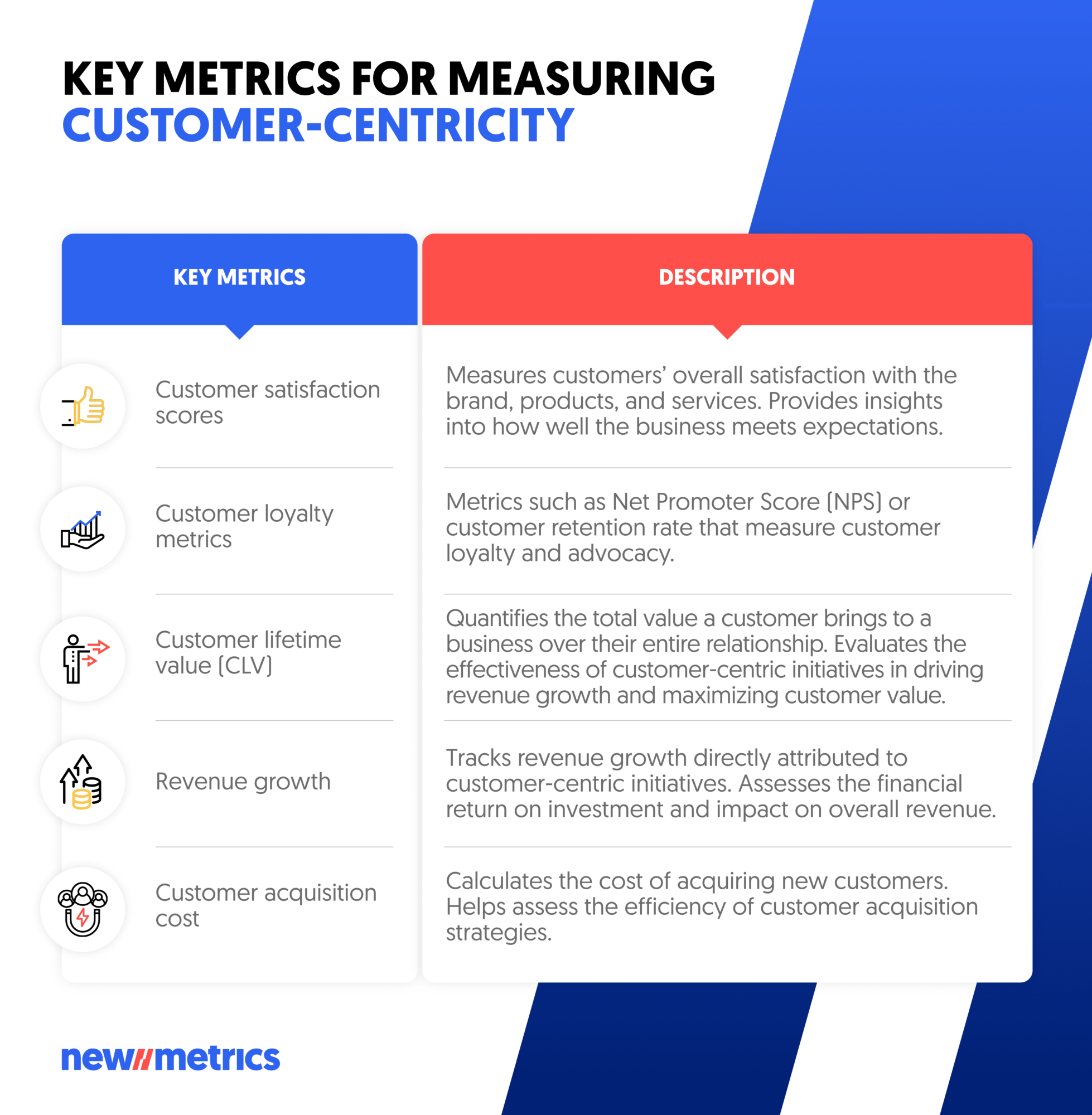
Tracking customer satisfaction and loyalty metrics
Customer satisfaction metrics typically involve surveys, feedback, or ratings that gather information about customers’ perceptions of a business, its products, or its services. These metrics help identify areas of improvement, strengths, and weaknesses in meeting customer expectations. By tracking customer satisfaction scores, businesses can identify trends, patterns, and areas for improvement to enhance the overall customer experience.
On the other hand, loyalty metrics measure the degree of customer loyalty and commitment to a brand or business. This can include customer retention rates, repeat purchase rates, or Net Promoter Score (NPS). These metrics provide insights into customers’ likelihood to continue doing business with the company and their willingness to recommend it to others. Tracking loyalty metrics helps businesses assess the effectiveness of their strategies in fostering long-term relationships with customers and building brand advocates.
By regularly tracking and analyzing customer satisfaction and loyalty metrics, businesses can gain valuable insights into customer perceptions, identify areas for improvement, and make data-driven decisions to enhance the overall customer experience. This information is instrumental in developing strategies that meet customer needs, build loyalty, and drive business growth.
Measuring customer lifetime value and revenue impact
Measuring customer lifetime value (CLV) involves assessing the total value a customer generates for a business throughout their entire relationship with the company. It provides insights into the long-term revenue potential and profitability of individual customers or customer segments.
Customer lifetime value is calculated by considering various factors such as the customer’s average purchase value, purchase frequency, duration of the customer relationship, and the associated costs of serving that customer. By quantifying the value a customer brings over their lifetime, businesses can better understand the financial impact of their customer-centric initiatives.
CLV helps businesses evaluate the effectiveness of their strategies in driving revenue growth. It enables them to identify high-value customers and allocate resources accordingly to nurture and retain these valuable relationships. By maximizing customer relationships’ value, businesses can enhance customer loyalty, increase customer retention rates, and drive repeat purchases.
Furthermore, measuring the revenue impact of customer-centric initiatives provides insights into how these efforts contribute to the business’s overall financial performance. By tracking the revenue generated from specific customer-focused strategies, businesses can assess the return on investment and prioritize initiatives with the most significant revenue impact.
Measuring customer lifetime value and revenue impact allows businesses to make data-driven decisions, optimize their marketing and customer retention strategies, and allocate resources effectively to drive revenue growth and maximize the value derived from customer relationships.
Customer feedback and sentiment analysis
Analyzing customer feedback involves systematically reviewing and interpreting customer feedback through various channels such as surveys, online reviews, social media comments, or direct interactions with customer support teams. This process helps businesses understand customer opinions, preferences, and concerns, enabling them to make informed decisions and improvements.
By analyzing customer feedback, businesses can identify areas where they may fall short of customer expectations, uncover pain points in the customer journey, and pinpoint opportunities for enhancement. It allows them to gather actionable insights and effectively prioritize efforts to address customer needs.
Sentiment analysis, often conducted through natural language processing and machine learning techniques, adds another layer of understanding to customer feedback. It involves assessing the sentiment or emotional tone expressed in customer comments, reviews, or social media posts. Sentiment analysis helps businesses gauge the overall sentiment towards their brand, products, or specific aspects of the customer experience.
By employing sentiment analysis, businesses can identify customer sentiment patterns, track customer perception shifts over time, and identify potential brand advocates or detractors. This information is valuable for understanding customer satisfaction, identifying trends, and making data-driven decisions to improve products, services, or customer interactions.Customer feedback and sentiment analysis provide businesses with a comprehensive understanding of customer experiences, expectations, and sentiments. By leveraging these insights, businesses can implement targeted improvements, enhance customer satisfaction, and foster stronger customer relationships. It ultimately leads to more customer-centric decision-making and continuous improvement in the overall customer experience.
Customer-centricity is not just a philosophy but a strategic imperative for businesses. Organizations can drive growth, build loyal customer bases, and create sustainable competitive advantages by placing the customer at the center of decision-making. Customer-centric strategies can lead to improved financial performance and bottom-line results. Satisfied and loyal customers tend to make repeat purchases, spend more over their lifetime, and become brand advocates, driving revenue growth and profitability.
A strong brand reputation is crucial for sustained success in the digital era, where customer feedback and opinions spread rapidly through various online channels. By consistently delivering exceptional experiences and meeting customer expectations, businesses can build trust, differentiate themselves from competitors, and weather challenges more effectively. Moreover, customer-centricity mitigates risks and enhances brand reputation.