
2026: The Year of Compound Capabilities
Why growth will accelerate at the intersection of technology, culture, and analytics.
With a decade of hands-on experience in transformation programs, from redesigning customer experiences in telecoms, to scaling an operationally complex technology business through IPO, and now fueling growth at New Metrics, I see 2026 as a defining turning point. Over the past few years, companies invested heavily in digital platforms, AI capabilities and large data environments. Many believed that these investments alone would unlock meaningful growth and operational clarity. Instead, the impact was often fragmented: systems were modernized, but friction persisted, customer experience improved in parts, yet service breakdowns continued; automation was introduced, but inefficiencies resurfaced.
The truth is clear: technology alone does not transform an organization. When it is not supported by timely analytics and sustained cultural adoption, sustainable value is limited.
This is why I believe 2026 will be the year of compound capabilities, where companies stop launching fragmented initiatives and instead integrate technology, analytics, and culture into a unified system. When this alignment happens, organizations unlock compounding performance gains that increase with every operational cycle. Those who recognize and act on this shift early will outperform those still pursuing disconnected, standalone transformation efforts.
Why 2026 Marks a Structural Shift
Three realities are pushing organizations toward a compound?capability model: the plateau of standalone technology, rising expectations for seamless experiences, and increasing demand to generate measurable, efficient growth.
The Limits of Standalone Technology
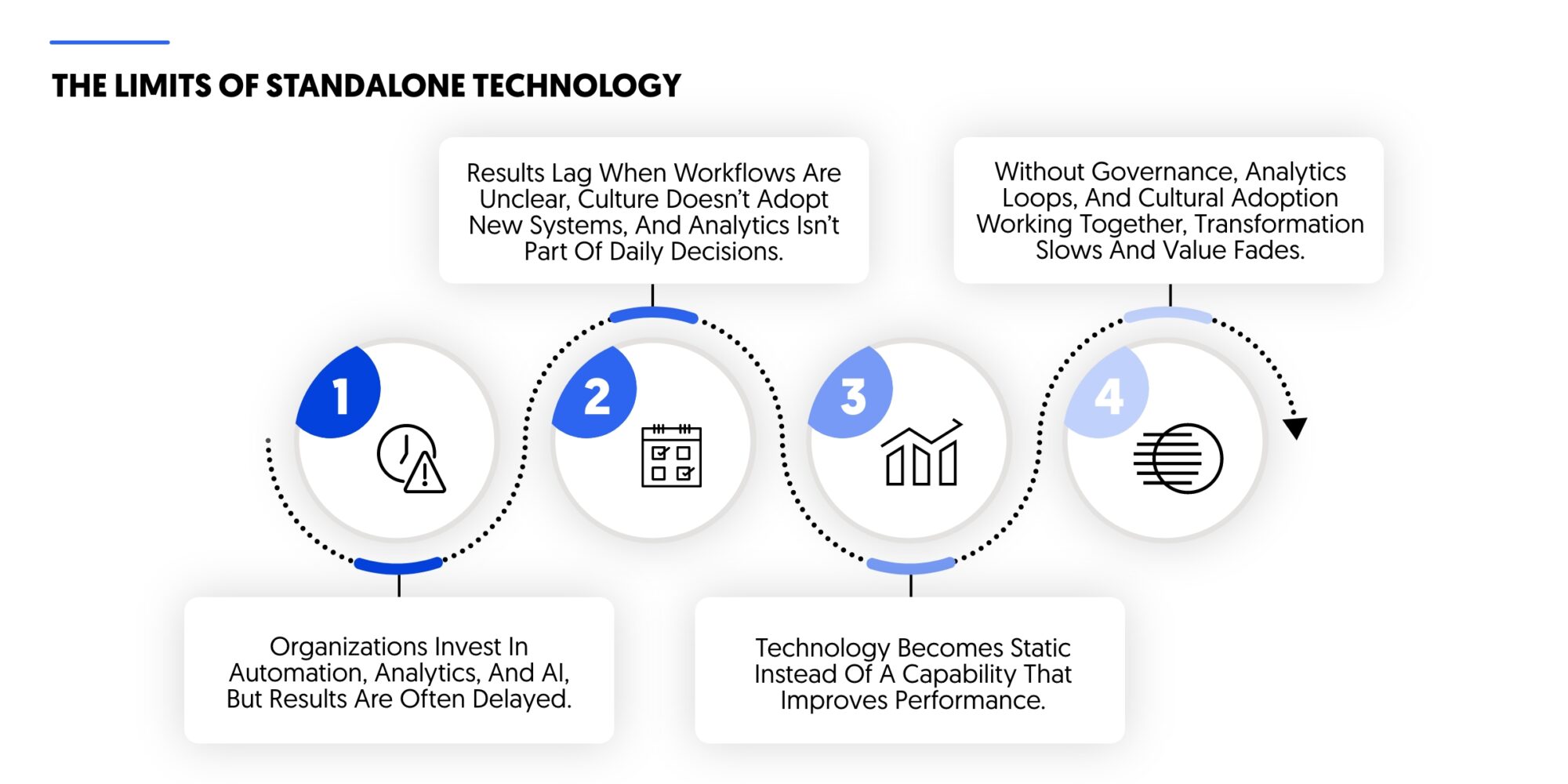
Digital transformation efforts accelerated across markets. Many organizations deployed automation, analytics platforms, service systems, and AI tools. Nevertheless, executives still ask, “We have invested, so why are results delayed?” I saw this firsthand while leading transformation programs. The pattern is almost always the same. When workflows lack clarity, when culture doesn’t adopt new systems, and when analytics is not embedded into everyday decisions, results become fragmented. Technology ends up functioning as static infrastructure rather than a living capability that evolves and improves performance.
Without governance, analytics loops, and cultural adoption working together, transformation slows, value erodes, and early wins fade.
Rising Expectations on Both Sides of the Experience
Today, across every sector, expectations have fundamentally shifted. Customers no longer tolerate uncertainty, slow responses, or generic interactions. They expect real-time visibility, faster resolution and experiences tailored to who they are. At the same time, employees want clarity, seamless workflows, and tools that make work easier. They want systems that reduce friction, not increase it. What once differentiated organizations is now simply the baseline expectation.
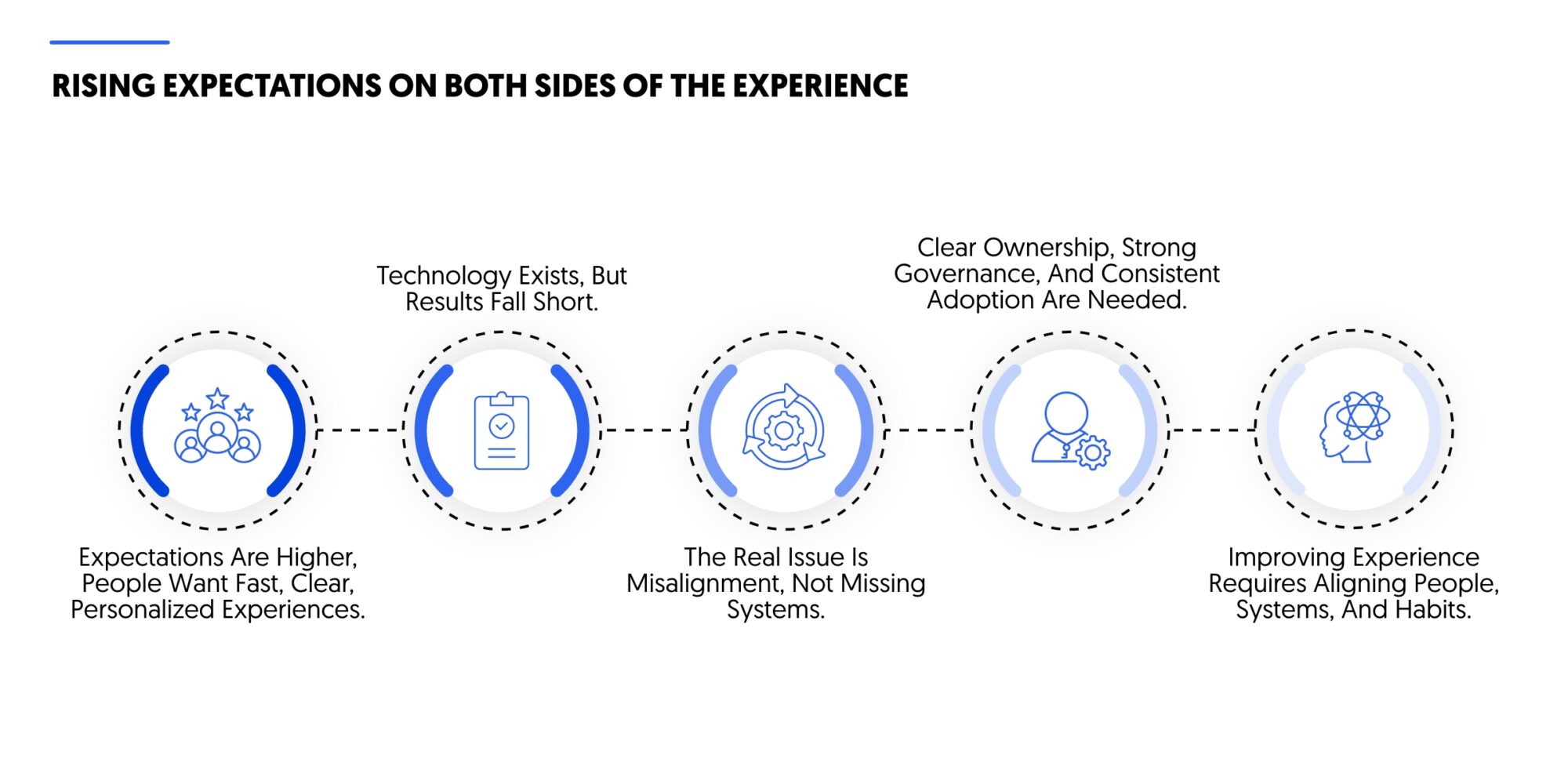
At New Metrics, working with organizations across industries, we rarely see technology itself as the limitation. Platforms are rolled out, dashboards go live, and automations technically operate, yet outcomes still fall short. The gap does not come from missing systems but from missing alignment. Ownership is unclear, governance is fragmented, and teams struggle to embed new ways of working consistently.
Until organizations translate data into everyday decisions, assign accountable owners for outcomes, and build routines that reinforce adoption, performance will remain inconsistent.
Simply put, improving experience today is not about adding more technology. It is about aligning people, systems, and habits so capabilities reinforce each other and performance compounds over time.
The Efficiency Imperative
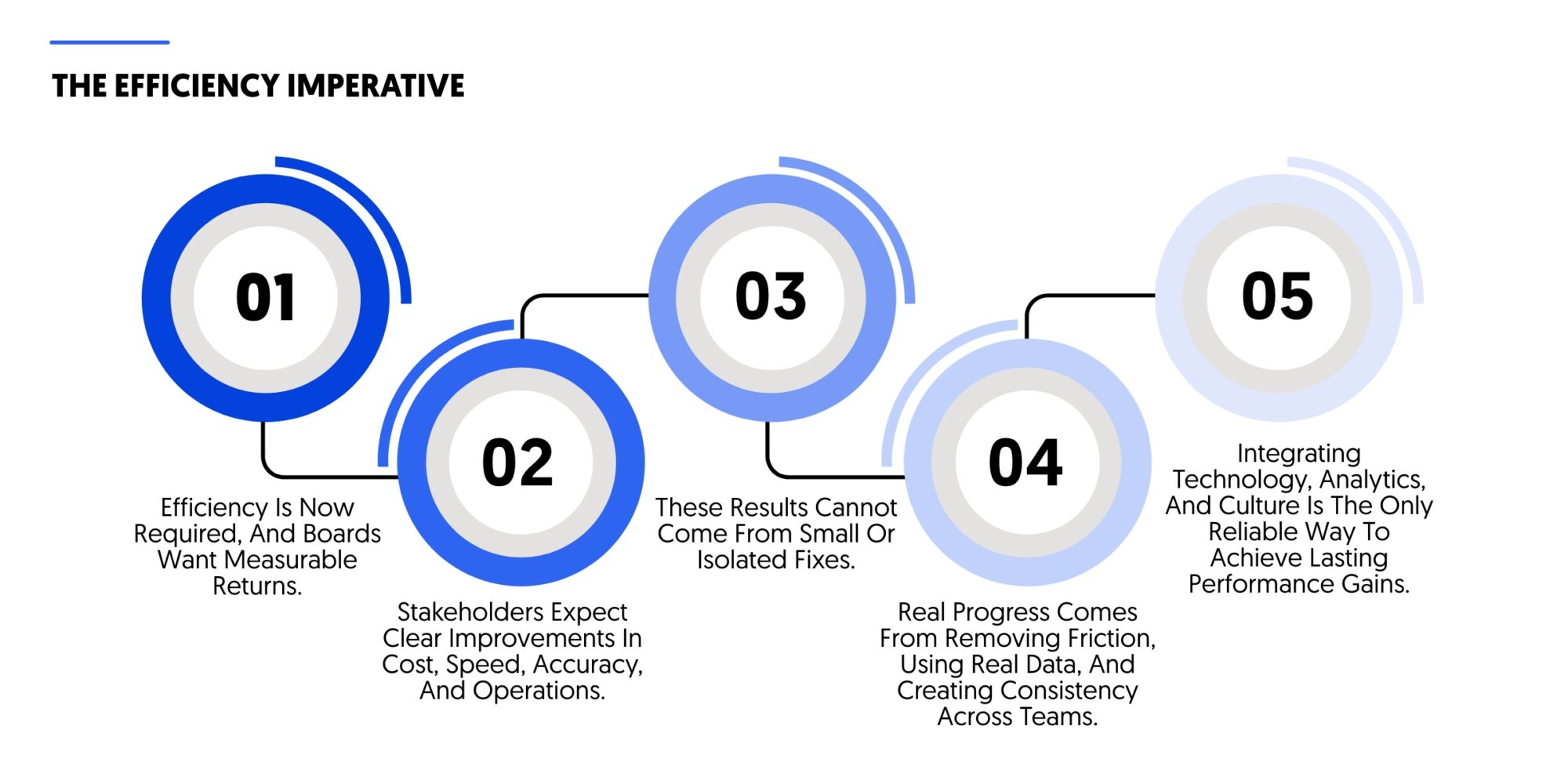
Efficiency pressures are no longer negotiable. Boards are asking where the return is, not in strategy documents, but in measurable terms. Stakeholders expect tangible improvements: lower cost-to-serve, faster throughput, higher accuracy, and visible improvements in how operations run. These expectations cannot be met through incremental fixes or isolated initiatives. This is where compound capabilities become critical. By eliminating friction, grounding decisions in real data, and creating consistency across teams, organizations are able to unlock improvements on multiple dimensions at once. Under these constraints, integrating technology, analytics, and culture is not just preferable, but it becomes the only reliable path to performance gains that sustain over time.
What Compound Capabilities Look Like
Compound capabilities arise when technology, analytics, and culture are not separate levers, but interconnected parts of a system. Each strengthens the other. Technology enables scale. Analytics guide direction. Culture ensures adoption and continuous optimization. Individually they deliver value. Together they create a virtuous cycle.
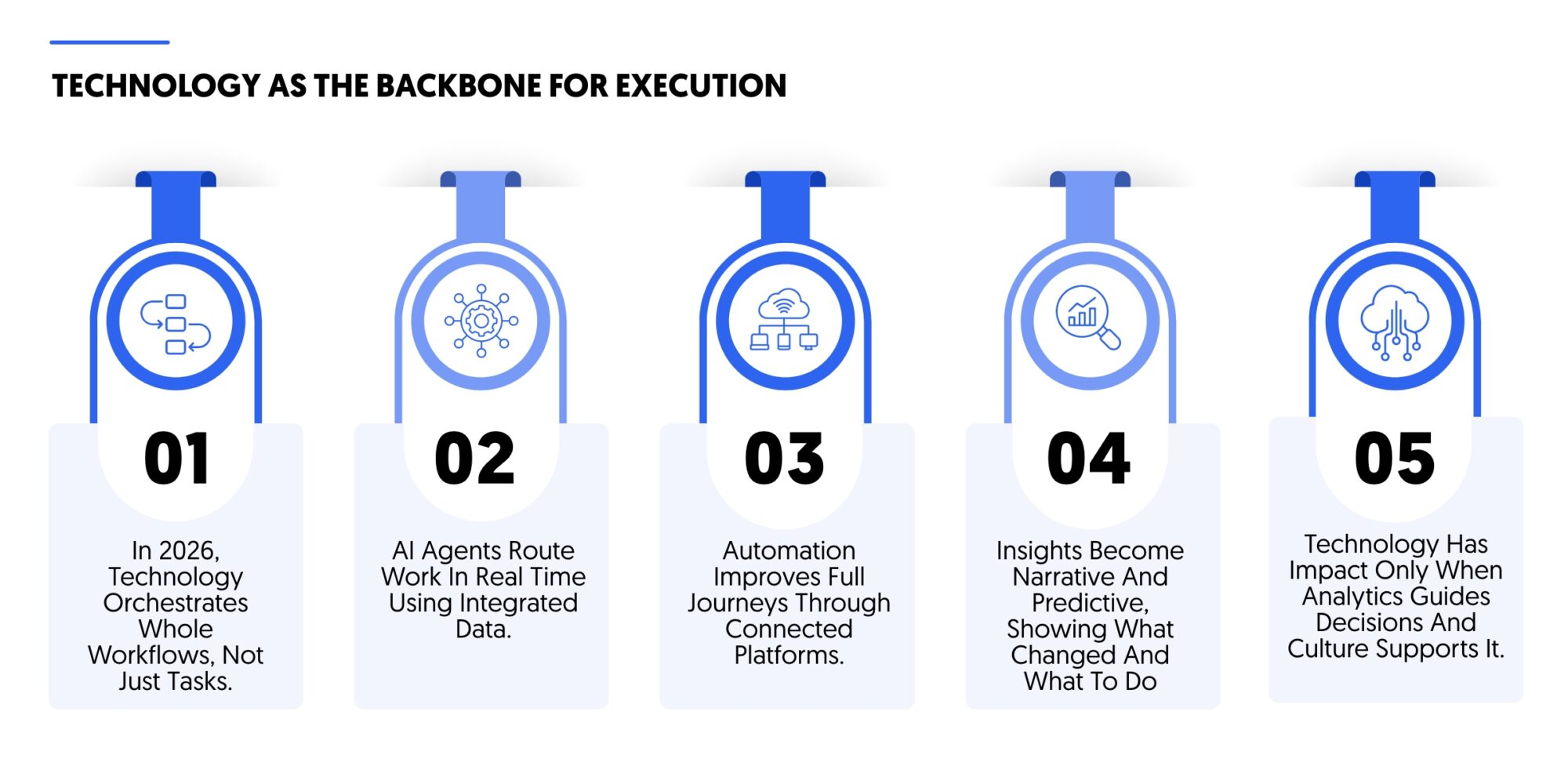
Technology as the Backbone for Execution
In 2026, technology evolves from enabling tasks to orchestrating entire workflows. AI agents shift from simple automation to directing process in real time, interpreting signals, and routing work across teams. Experience, operational, financial, and workforce data flows seamlessly across integrated platforms, allowing automation to redesign full journeys rather than isolated steps.
In parallel, insight delivery evolves. Static dashboards give way to narrative insight engines that explain what changed, why, and what needs action. Predictive analytics anticipates peaks in demand, resource constraints, or customer issues before they escalate, enabling prevention rather than reaction.
Technology remains foundational, but its true impact emerges when decisions are guided by analytics and reinforced by culture.
Analytics as the Strategic Compass
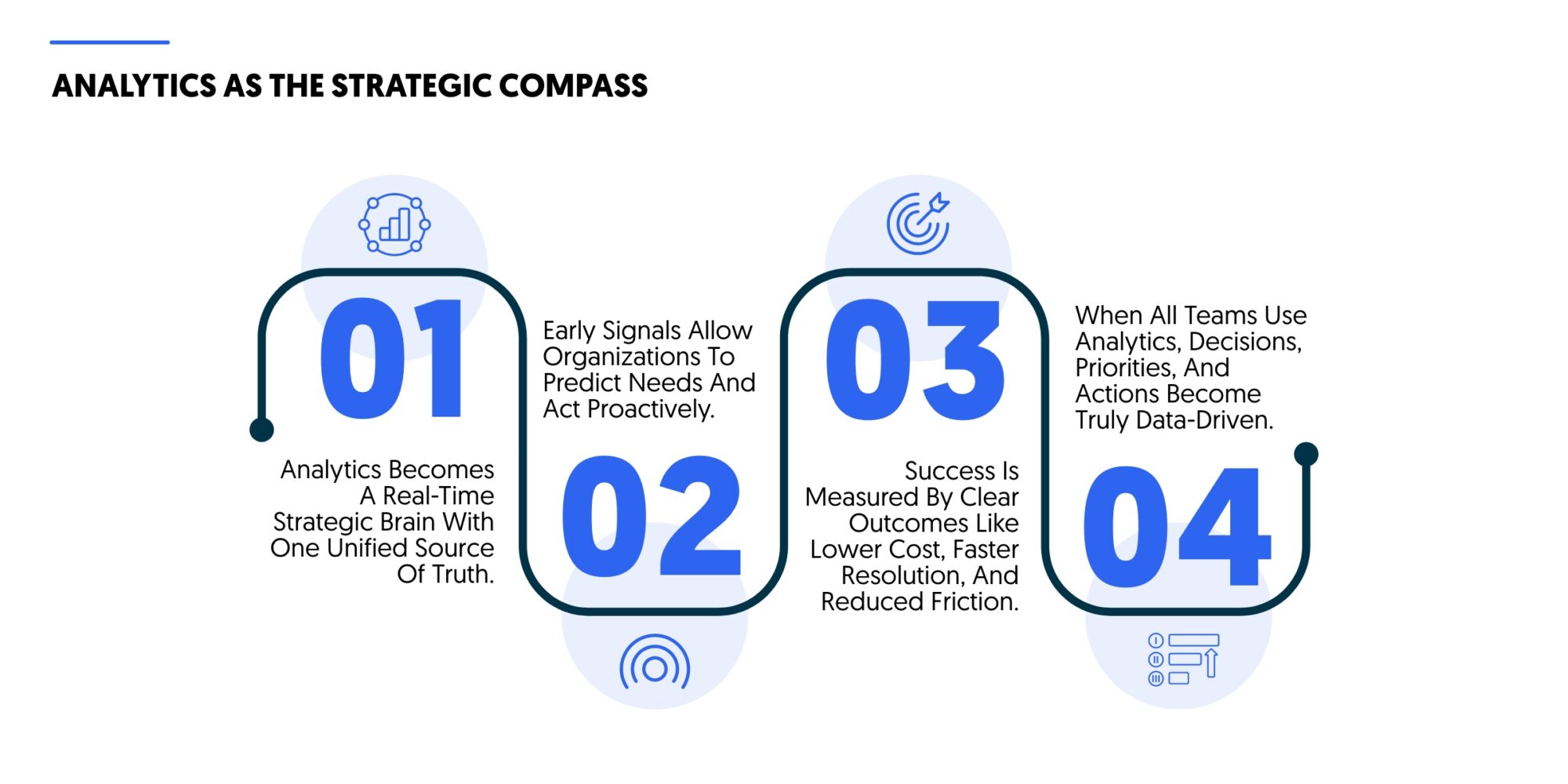
Analytics becomes the organization’s real-time strategic brain rather than a tool for post?mortem reporting. Unified data environments bring together behavioral, operational, financial, and experience metrics-into a single source of truth. Signals emerge early: rising case volumes, shifts in demand, friction points, changes in employee sentiment.
Organizations that master this integration gain predictive power. They detect inefficiencies, anticipate customer expectations, and allocated resource proactively. Performance is defined not by features implemented, but by measurable outcomes: lower cost-to-serve, shorter resolution times, reduced friction, and higher throughput.
When analytics becomes a capability shared across teams, not confined to specialists, it actively shapes prioritization, planning, and execution. Teams align decisions to data, focus efforts where impact is highest, and respond faster with confidence grounded in evidence.
Culture as the Multiplier for Sustained Impact
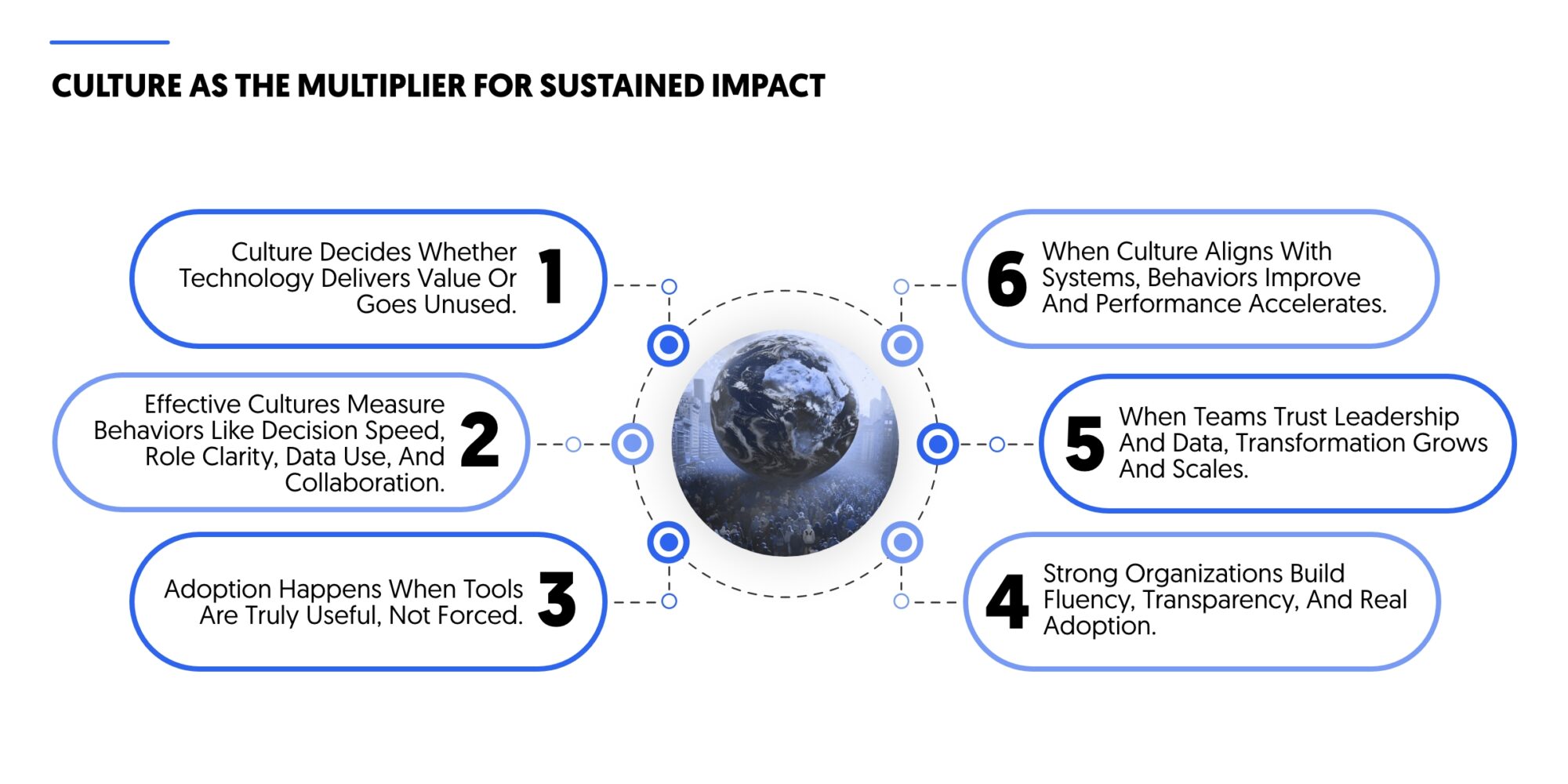
Culture ultimately determines whether technology creates value or remains unused infrastructure. In effective organizations, culture shifts from being a “soft factor” to a measurable performance enabler. Organizations begin to look at cultural health in operational terms: decision latency, clarity in roles, data adoption rates, collaboration quality, and willingness to experiment.
In my experience, technology investments are irrelevant if usage requires constant reminders. Adoption must be voluntary because it is clearly useful, not forced through follow-ups. The organizations that succeed build fluency rather than tool training, they promote transparency rather than escalation chains, and they measure adoption instead of just availability.
When teams trust both leadership and data and when workflows reward agility, the transformation gains momentum. Technology and analytics can introduce capabilities, but culture ensures they are constantly applied, improved and scaled.
Ultimately, when culture aligns with systems, behaviors change organically, performance compounds, and value accelerates through continuity.
Quantifying the Impact: What Organizations Can Achieve
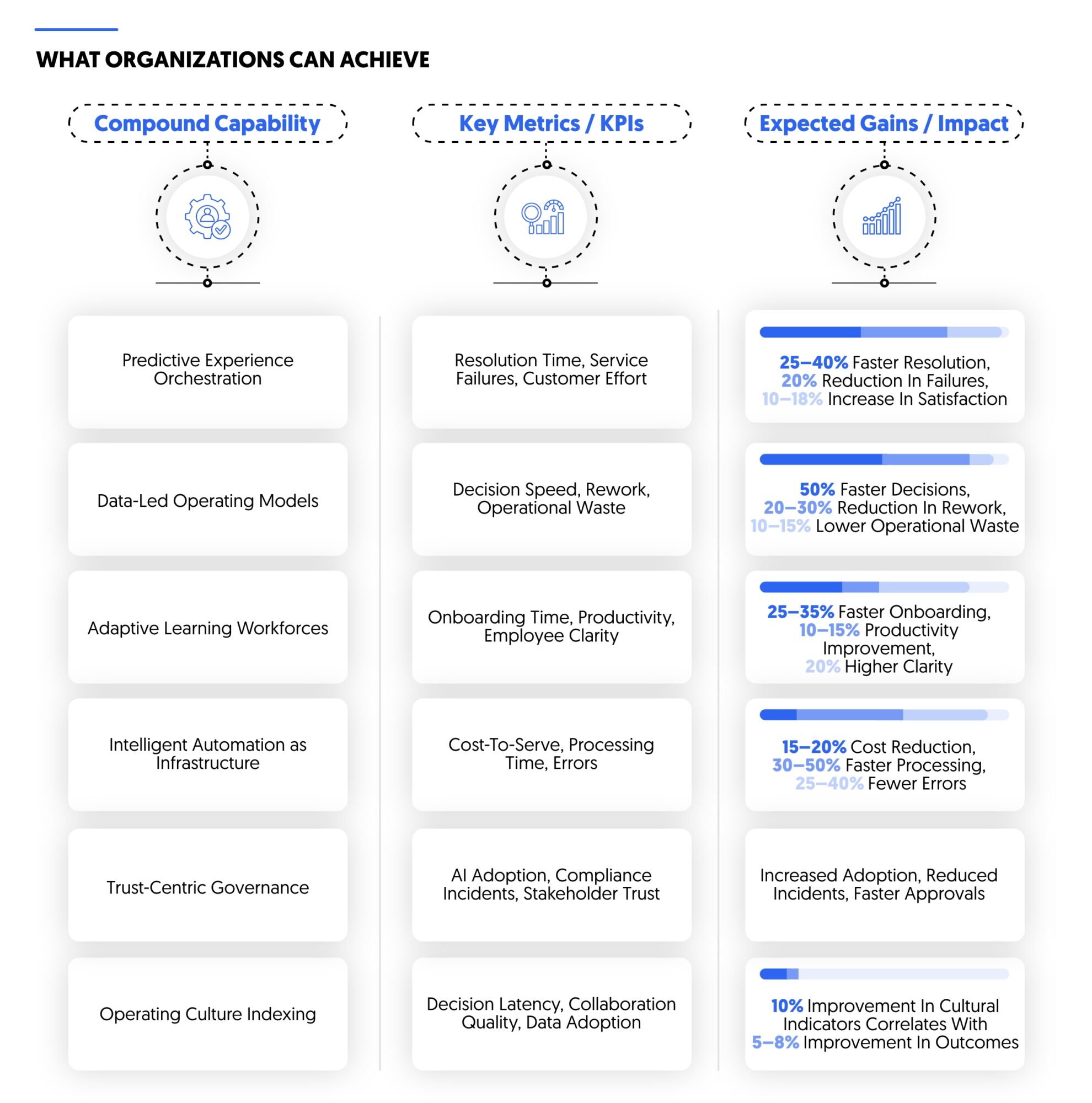
The combined adoption of automation, analytics, and cultural alignment delivers measurable improvements. Industry data offers a starting point for what is possible and what becomes probable under a compound-capabilities model.
Organizations that deploy intelligent automation (automation + AI) report average cost reductions of 22% and revenue increases of 11% over three years. Some that scaled automation already report cost reductions of 27%.
Wider workflow automation efforts show similar gains: across organizations, automation has improved productivity and efficiency for 74% of knowledge?worker environments.
In certain implementations, firms see ROI of 240% within two years after introducing automation, with cost reductions and productivity gains combining to justify the investment in under 9 months.
In retail settings, adoption of generative AI across core workflows has shown conversion?rate uplift by up to 16.3%-a direct productivity boost, assuming constant inputs and prices – demonstrating how experience improvements translate into tangible value.
For enterprises that implement automation as core infrastructure (not just point solutions), estimates point toward 25–45% improvements in operational efficiency across core operations.
Sector Implications: What Compound Capabilities Mean Across Industries
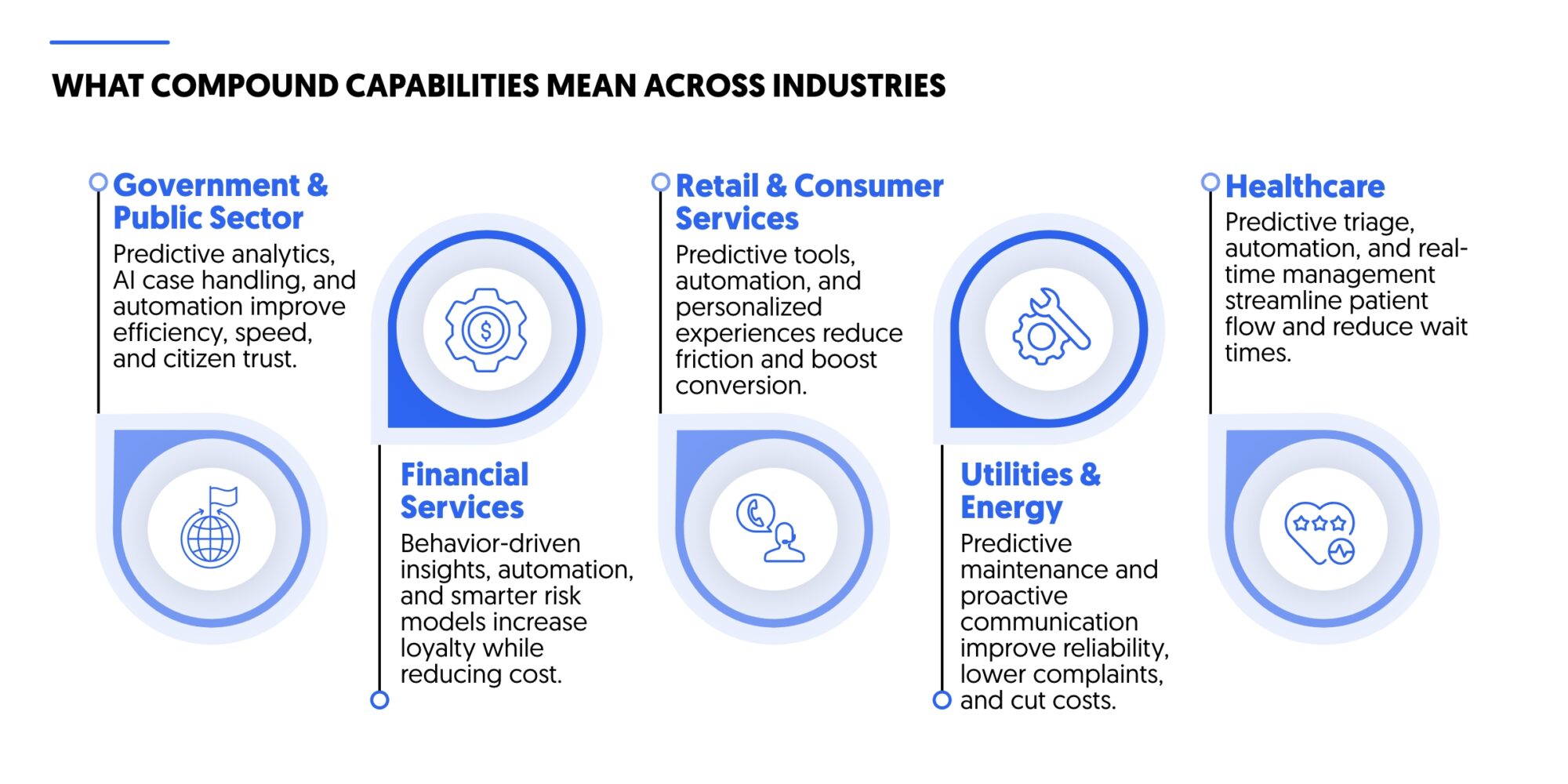
In Government and Public Sector, compound capabilities unlock efficiency and citizen trust. Predictive analytics identifies service bottlenecks before they blow up. AI-enabled case?handling reduces resolution times. Automation handles routine queries, freeing human agents for complex issues. Data transparency and fast response build confidence. Over time, cost-to-serve drops, while citizen satisfaction and trust rise without sacrificing service quality.
In Financial Services, banks and fintechs shift from broad segmentation toward behavior-driven personalization. Analytics-powered insights uncover unspoken customer needs. Automation reduces cost-to-serve. Experience optimization reduces attrition. Risk models integrate behavioral signals, enabling proactive retention and fraud prevention. The result: higher loyalty at lower cost.
In Retail and Consumer Services, friction becomes the enemy. Predictive replenishment avoids stockouts. Automated customer support resolves issues before escalation. Experience platforms tailor interactions based on real behavior, not guesswork. As a result, conversion rises, operational cost falls, and churn reduces.
In Utilities and Energy, predictive maintenance and proactive communication become standard. Automated scheduling and demand forecasting improve reliability. Transparent, anticipatory communication reduces customer complaints. Cost savings come from fewer outages and more efficient resource allocation. Customer trust increases as reliability improves.
In Healthcare, predictive triage, automated workflows, and real-time capacity management optimize patient journeys. Administrative burden falls, clinicians focus on care, and patient throughput increases. Analytics helps forecast demand, manage staffing, and reduce wait times-improving outcomes while controlling costs.
Across sectors, the compounding effect becomes visible: once technology, analytics, and cultural alignment converge, value grows not in linear increments, but through reinforcing loops of performance, learning, and optimization.
Leadership in the Era of Compound Capabilities
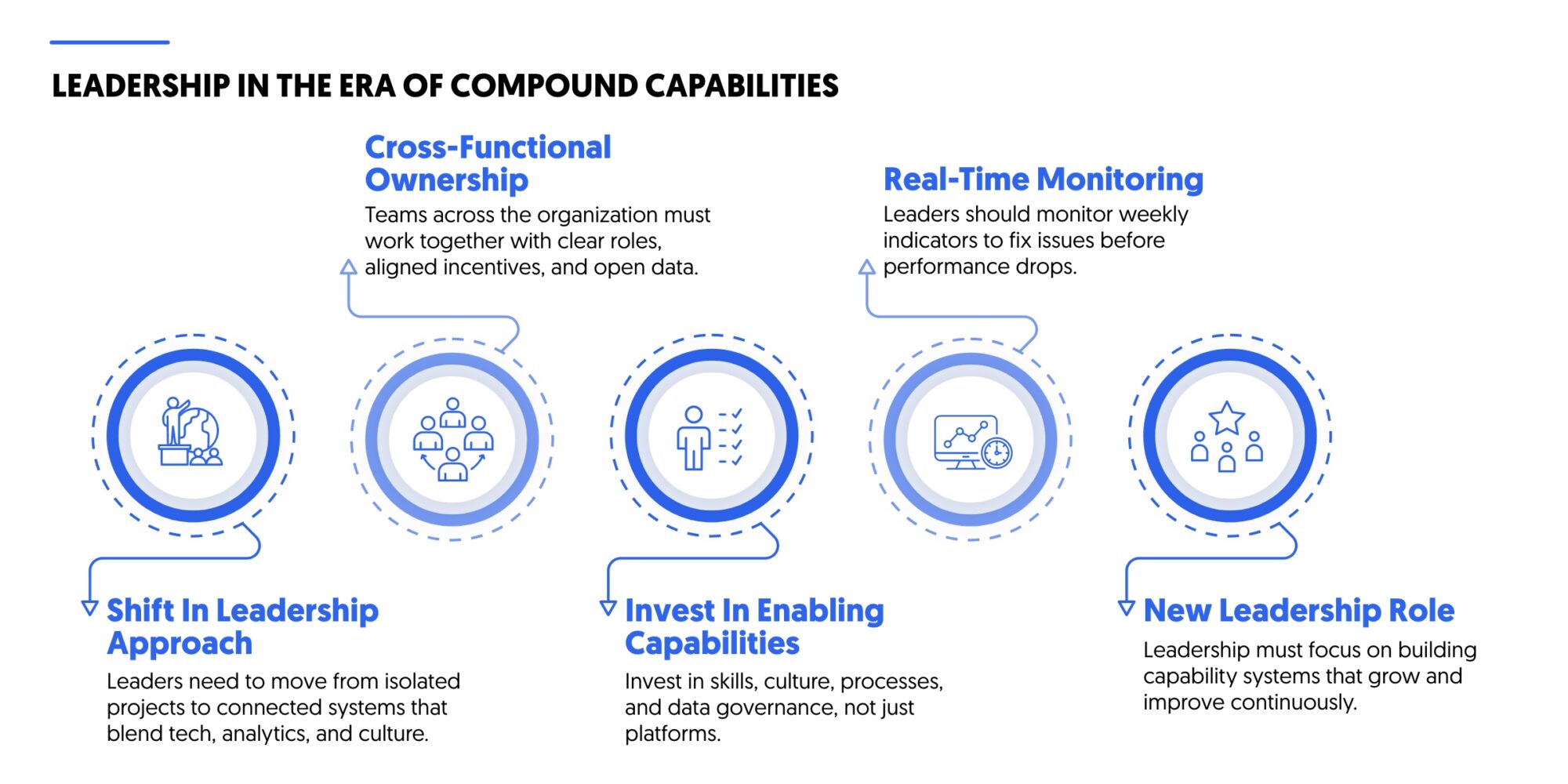
For 2026 to deliver on its promise, leadership must shift from sponsoring isolated initiatives to designing integrated systems. This requires thinking in capability ecosystems rather than one-off projects, where technology, analytics, and culture reinforce each other continuously.
Leaders need to build shared ownership across functions: tech, HR, operations, finance, customer service. They should align incentives to long-term value drivers such as cost-to-serve, throughput, quality, satisfaction. Clear roles, transparent decision rights and open access to data must replace ambiguity.
Investments should extend beyond platforms to capabilities that enable their sustained impact: analytics fluency across teams, cultural clarity, redesigned processes, and strong data governance. Leadership should track weekly signals rather than quarterly summaries in friction spikes, process delays, sentiment changes, anomaly detection, so adjustments happen early, not after performance deteriorates.
Ultimately, leadership must move from overseeing projects to curating capability systems, that scale, compound, and reinforce performance every time they run.
How Organizations Should Prepare Now
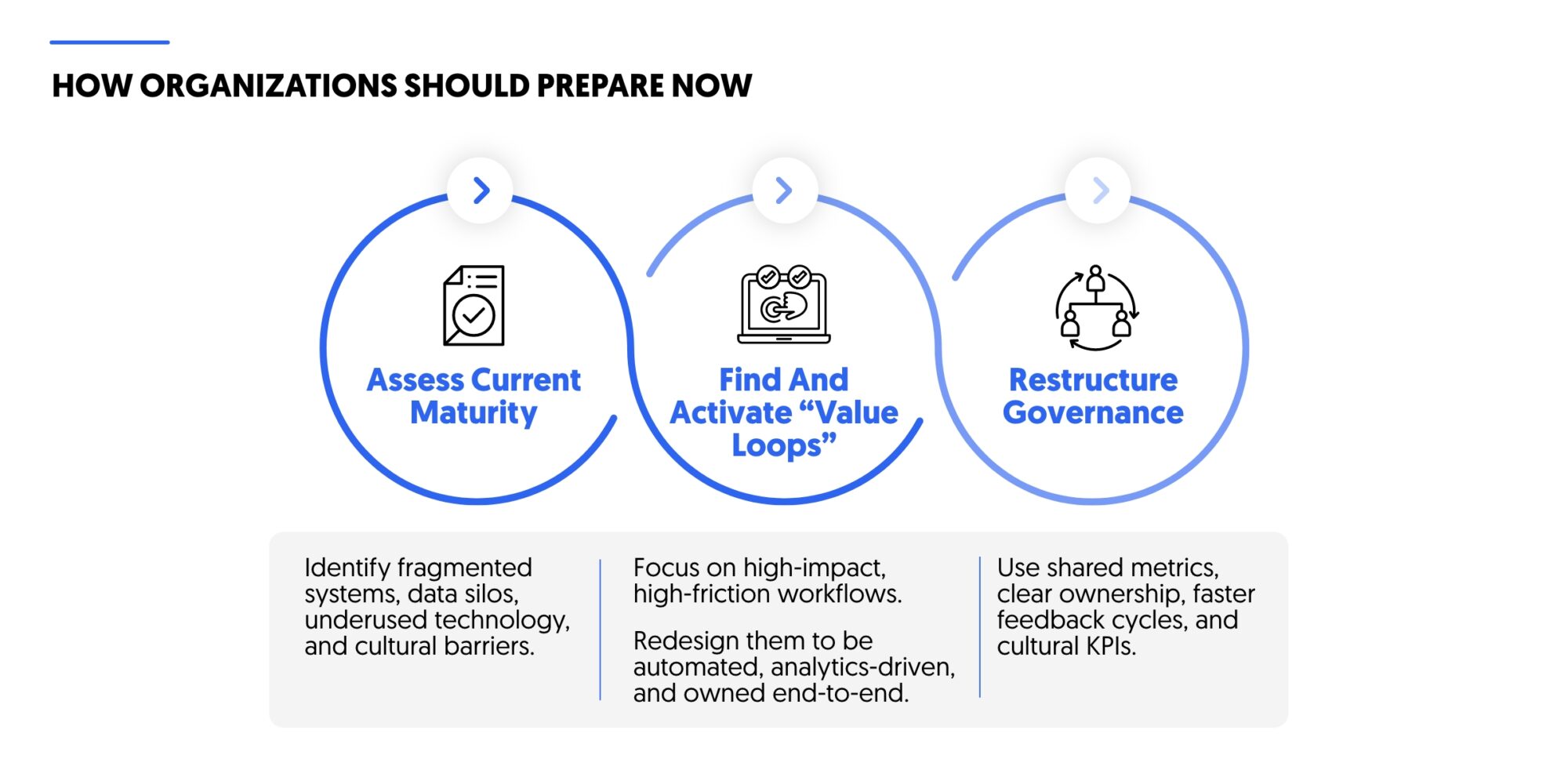
Organizations aiming to thrive in 2026 should begin with three foundational steps.
First, assess current maturity across three axes. Map where systems are fragmented, where data silos exist, where technology exists but is not used, and where culture slows adoption.
Second, identify “value loops”: places where improvements in one domain strengthens the others. Prioritize workflows that are frequent, high impact, and currently friction-heavy, and redesign those journeys so they are automated, guided with real?time analytics, and owned end-to-end by teams.
Third, restructure governance and rhythm. Implement shared metrics, transparent ownership, faster feedback cycles, and clear accountability. Embed cultural measurement alongside financial and operational KPIs.
Organizations that act now gain early advantage, building capability loops that strengthen over time.
2026 will not be defined by the next breakthrough technology. Rather, it will be defined by how organizations assemble what already exists. The differentiator will not be the tools companies buy, but the systems they build. When technology, analytics, and culture converge into a functioning system, value compounds. Organizations that build these interconnected capabilities unlock measurable growth, sustained reliability, and renewed trust. Those that do will operate more efficiently, scale faster, and deliver consistent, high?quality experiences to customers, employees, and stakeholders alike.
In an environment where expectations keep rising while resources stay constrained; compound capabilities are no longer an advantage. They are the foundation of resilience and long-term success.